


Stock and Ordering Controls in Hospitality: The Framework That Keeps Cash Moving

Updated: Sep 4
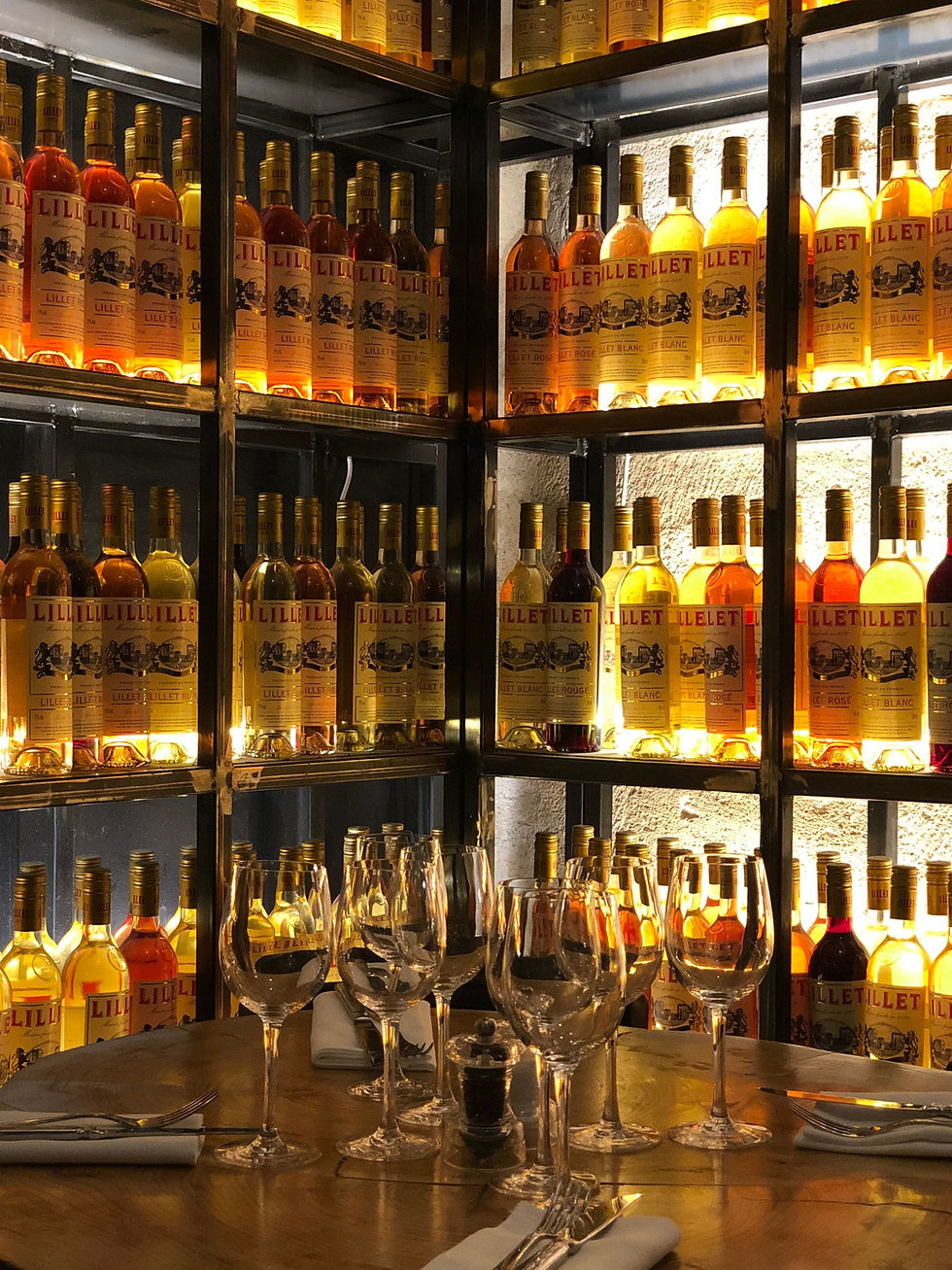
Anybody know a cocktail that includes Lillet Blanc, asking for a friend?
I have seen this type of thing quite often., it’s usually the chef placing the order from the comfort of their sofa at home.
No count.
No visibility.
Just a best guess at what might be needed based on what they remember seeing last time they were in the building, all whilst their priority is Jeremy Clarkson and Who Wants To Be a Millionaire!
That is a perfect snapshot of what setting yourself up to fail looks like.
Stock is money. Treat it like it.
Know what you have before you order.
Full count first. Every time, without exception.
See exactly what is on the shelf before you calculate what needs to be ordered. Ordering without counting is guesswork dressed up as management.
Set a fixed ordering day. Count on that day. Order on that day. In the building. With the stock in front of you. Not from memory. Not from habit. Not because the rep rang and caught you in a good mood.
The Lagavulin problem.
You sell 4 shots of Lagavulin a month. There is a backup bottle in the spirit store. That bottle might sit there for six months before it gets touched.
You might as well pin two £20 notes to the spirit store wall.
It is not going off. It is not at risk. It is just cash that could have been spent on something that's going to generate cash profit for you in the same week, instead of sitting on a shelf doing nothing. That is the real cost of over-stocking slow movers. Not spoilage. Dead money.
Now apply that logic to a pack of 20 chicken supremes or a cask of Fursty Ferret with three days shelf life left. That's not stock, it's a bet. It's like backing a three-legged greyhound and hoping for the best. You're not investing cash in an asset; you're gambling that enough customers walk through the door before time expires.
And if you are selling 4 shots of Lagavulin a month, the real question is not how much to hold. It is why it is on the list at all. Slow movers clutter the back bar, complicate ordering, and tie up space that could be earning. Cut it. Replace it with something that sells. Nobody is going to miss it.
Order little and often.
Small orders on a regular basis are better than one big order and hoping for the best.
Bulk buying feels efficient. It rarely is. You get the discount, you take the delivery, and then you spend the next three weeks hoping you sell it before it expires, gets tipped down the drain or takes up space you need for something else.
Regular smaller orders keep stock turning, keep cash moving, and keep your storage areas manageable. They also mean that when something stops selling, you are not sitting on six cases of it.
The discipline is simple. Count what you have. Order what you need to get to par. Do it on the same day every week. That is it.
Set par levels and use them.
A par level is the maximum stock you want to hold of any given stock item at any given time.
The formula is straightforward:
Par Level = (Average Daily Usage x Lead Time) + Safety Stock
If you use 2 bottles of house red a day and your delivery lead time is 3 days, you need 6 bottles to cover the gap. Add 2 as a sensible buffer. Your par level is 8. Not a case of 12.
Safety stock isn't an excuse to over-order. It is a buffer against a late delivery or an unexpectedly busy weekend. It is not a second cellar.
Par levels and cash flow - The connection lots of operators miss.
Setting sensible par levels is not just about having the right amount of stock. It is about keeping your cash moving. Every bottle, every kilo, every keg sitting above your par level is cash that has already left your bank account and has not come back yet.
In a business where margins are tight and cash flow is everything, that matters more than most operators realise. Poor cash flow is how profitable businesses go to the wall. Not bad food. Not empty restaurants. Cash that is not moving fast enough to cover what is due today, regardless of what the P&L says about last month.
Think about what that cash could be doing instead. Paying a supplier early for a discount. Covering payroll without the stress. Sitting in your account as a buffer against a quiet week.
Over-stocked businesses are not just inefficient. They are often cash poor despite being stock rich. The fridges are full. The cellar is stacked. And there is nothing in the account on a Thursday when wages go out.
Par levels done properly keep cash fluid. They force a discipline that means you are only ever buying what you need, when you need it, in the quantity your sales actually justify. Not what looked like a good deal. Not what the rep suggested. Not what you ordered last month out of habit.
Stock rich and cash poor is one of the most common and most avoidable problems in hospitality. The answer is not complicated. It is a number on a shelf and the discipline to stick to it.
Stockholding - The number that tells you everything.
There is one figure that tells you more about how well a business is managing its stock than almost anything else. Stockholding days.
The formula:
Stockholding Days = Stock Value at Cost divided by Daily Cost of Sales
If your stock at cost is £7,000 and your daily cost of sales is £900, you are holding 7.8 days of stock.
Under 14 days is the target. Seven days is where you want to be. Six to nine days is where the well-run operations consistently sit. In my experience, the sites with a stockholding figure in that range almost always have excellent results. It's not by coincidence — it tells you that they know exactly what is happening with their stock. They are ordering to replenish rather than to accumulate, and their forecasting is accurate enough to trust.
I have seen operations holding thirty days stock whilst still placing weekly orders on top of it. That is not a cellar. That is a warehouse with a bar attached.
Accurate forecasting is not optional here. It is the foundation. See how to build that forecasting discipline properly. You cannot set sensible par levels, order to replenish, or hit a 7 day stockholding figure without knowing what you are going to sell. And you cannot know what you are going to sell without tracking what you have sold, consistently, over time. The data is already in your EPOS.
The discipline is using it.
FIFO and FEFO - Both matter.
First In First Out means new stock goes behind old stock. Every time. In every fridge, every shelf, every cellar. Non-negotiable.
For perishables, First Expired First Out is sharper. It does not matter when something arrived, what matters is when it expires. The item with the shortest shelf life goes to the front regardless of when it was delivered.
If you are finding out of date product on your shelves, one of these two principles has broken down. Find where and fix it.
Waste tells you everything, but only if you record it.
Waste is not just the cost of the item written off. It is the signal that something in your ordering, your storage, or your preparation process is wrong.
Record every item wasted, every day, with a reason. Spoilage, over-prep, cooking error, breakage - categorised and dated. Do that consistently for a month and the patterns tell you exactly where to tighten.
If you are throwing away 10 portions of the same ingredient every week, you are over-ordering. If you are writing off the same product every Tuesday, something in your delivery schedule or storage is wrong. The waste sheet is not admin. It is intelligence.
The bottom line.
Stock management is not complicated. It is disciplined.
Full count before every order. Par levels set on data not habit. Rotation enforced without exception. Waste recorded in real time.
Get those four things right and your cash moves for you. Get them wrong and it sits on shelves, expires in fridges, and turns on the stillage.
I'm David Holden. I've spent 30 years working across hospitality audit and operations, helping hotels, pubs, restaurants and bars identify where profit is being lost and put practical controls in place to stop it.
If you're concerned about how much cash is tied up in stock, how accurately you're ordering, or where waste and poor stock control are eating into your margin, get in touch. I'll help you identify where the money is getting stuck and put practical controls in place to get your stock turning and your cash moving.


Comments